
Request Pricing
Get current pricing, available quantities,
photos, videos, and shipping options.
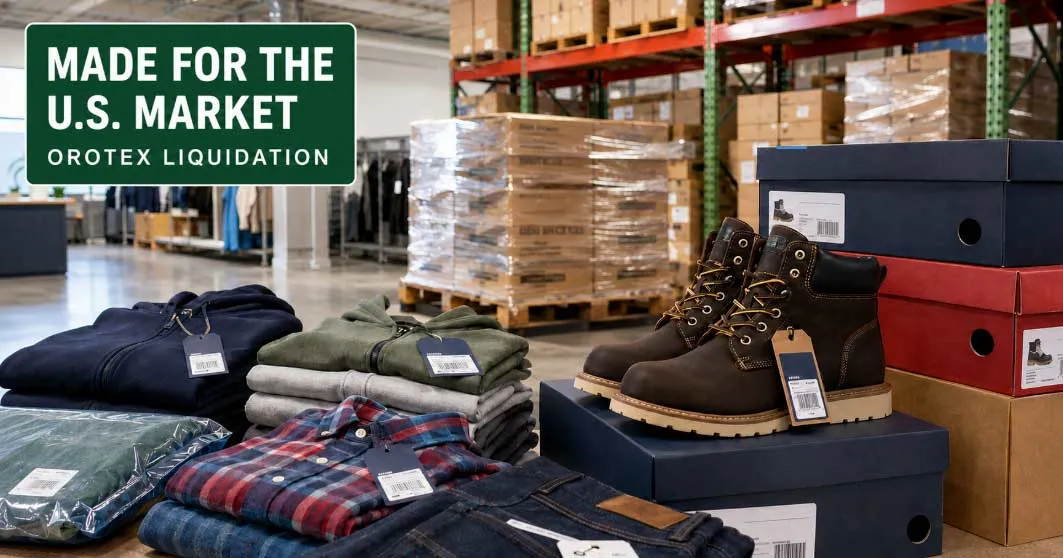
If you’ve ever purchased wholesale apparel, footwear, or liquidation merchandise, you’ve probably heard the phrase:
“Made for the U.S. Market.”
For many wholesale buyers, those five words immediately suggest better presentation, recognizable brands, retail-ready packaging, and higher perceived value. But what do they actually mean?
Does “Made for the U.S. Market” mean the product was manufactured in America? Does it guarantee higher quality? Or is it simply another marketing phrase used in the liquidation industry?
The answer is more interesting than most people realize. Understanding what “Made for the U.S. Market” really means helps wholesale buyers evaluate inventory more confidently, recognize authentic U.S. retail merchandise, and understand why millions of dollars’ worth of brand-new products enter the wholesale liquidation market every year.
In this guide, we’ll explain:
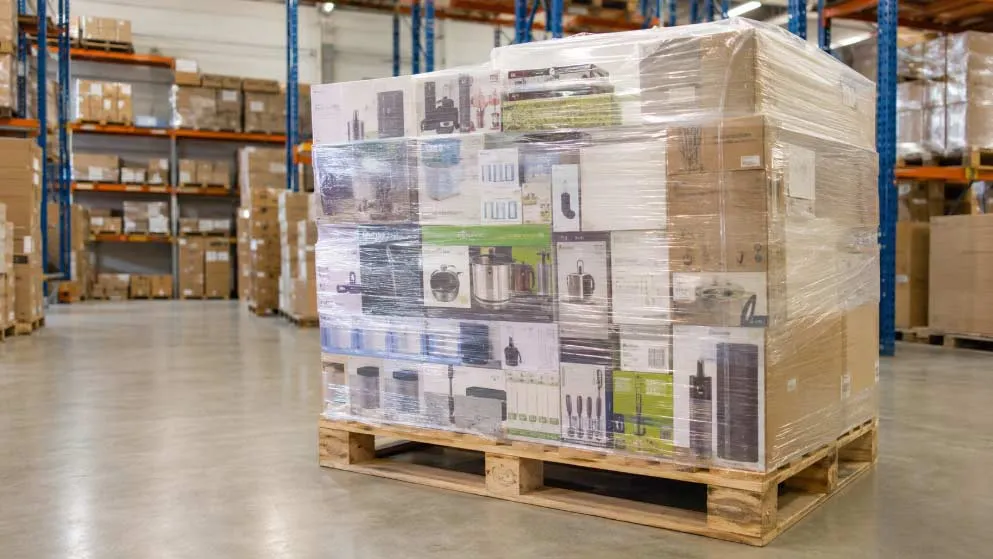
“Made for the U.S. Market” does not describe where a product was manufactured — it describes who it was developed for. It means a brand designed, specified, and packaged the product with one commercial destination in mind: to be sold to consumers in the United States, inside the U.S. retail system, and under U.S. rules.
A product can be manufactured in Asia or anywhere in the world and still be U.S. market merchandise, because what defines it is the set of decisions the brand made for that end consumer: materials for that specific line, U.S. sizing, labeling, certifications where required, packaging, and retail-ready presentation.
This is a key distinction for wholesale buyers, exporters, and resellers. When you source overstock inventory, closeout merchandise, or customer returns that were originally intended for U.S. retail, you’re not just buying product — you’re buying product built for one of the most demanding retail environments in the world.
Quick answer
“Made for the U.S. Market” = developed, specified, and packaged by the brand to be sold to U.S. consumers through American retail channels — regardless of the country of manufacture.
It is not the same as “Made in the USA,” which refers to where the product was physically produced.
For discount retailers, bin store owners, Amazon and eBay sellers, exporters, and retail arbitrage buyers, the origin market of the inventory is not a minor detail — it’s part of the product’s value. Merchandise developed for U.S. retail typically arrives with recognizable brands, English labeling, UPC codes, retail-ready packaging, and the presentation standards American shoppers expect.
That context travels with the product into the secondary market. A reseller who can tell their own customers “this inventory was originally developed for the U.S. retail market” has a selling point that generic, untraceable merchandise simply doesn’t offer.
👉 Ready to source brand-new U.S. market inventory by the pallet or truckload? Contact the Orotex team for current availability.
The United States is one of the most heavily regulated consumer markets in the world. A product doesn’t reach a U.S. store shelf simply because someone manufactured it — it must first comply with a framework of federal rules covering safety, labeling, and consumer information.
Some of the most relevant for apparel and footwear:
The point isn’t to memorize acronyms. The point is this: every product built for U.S. retail was designed to pass through that filter. Brands specify materials, stitching, labels, and packaging knowing they answer to a system that can audit, fine, or force a recall.
In short
When a product is developed to be sold in the United States, it’s typically designed with:
✔ Regulations that apply to the product type
✔ Labeling requirements
✔ Presentation expectations
✔ U.S. consumer preferences
✔ Competition in one of the largest retail markets in the world
This doesn’t mean every product is superior — it means it was built to compete in a high-expectation environment.
On top of regulations comes a second, arguably tougher filter: the American consumer.
The numbers speak for themselves:
What does this mean for a brand selling in the U.S.? A mediocre product rarely survives. If the boot falls apart in a week, the customer returns it for free, leaves a one-star review, and never comes back. That’s why many brands competing in this market invest in durability, comfort, finish, and presentation: in an environment with high consumer expectations, frequent free returns, and fierce competition, meeting those expectations becomes a commercial advantage.
That’s the logic behind the phrase “made for the U.S. market.” It’s not a claim that every product is better than any other country’s — it’s a description of an environment where the barriers to entry, both regulatory and commercial, are among the highest in the world.
Here’s a question few analyses answer: why does the phrase “American merchandise” sell on its own in export and reseller markets?
The answer isn’t “because it’s American.” It’s because, over decades, buyers have built a mental association between products intended for the U.S. market and a set of attributes: trust, recognizable brands, good presentation, durability, and a certain prestige. That association was formed through real experience and passed down over time.
In marketing terms, this is called perceived value: the value a customer assigns to a product because of its context and story, not just its physical features. And perceived value is very real when it comes to selling — two identical products can sell at different prices depending on the story attached to them.
For a wholesale buyer or reseller, this means the commercial origin of your inventory isn’t a minor data point — it’s part of the product. When you can credibly say “this lot was originally developed to be sold in the United States,” you’re activating an association your customer already carries.
Here’s the logical question: if this merchandise is so good, why is it sold in liquidation lots? The answer has nothing to do with product quality and everything to do with the mechanics of U.S. retail.
The U.S. secondary market for liquidation moves an estimated $644 billion per year, fed by three main sources:
In other words, liquidation is a pressure valve for the world’s largest retail system. Merchandise isn’t liquidated because it’s bad; it’s liquidated because the system that created it produces more than its primary channel can absorb.
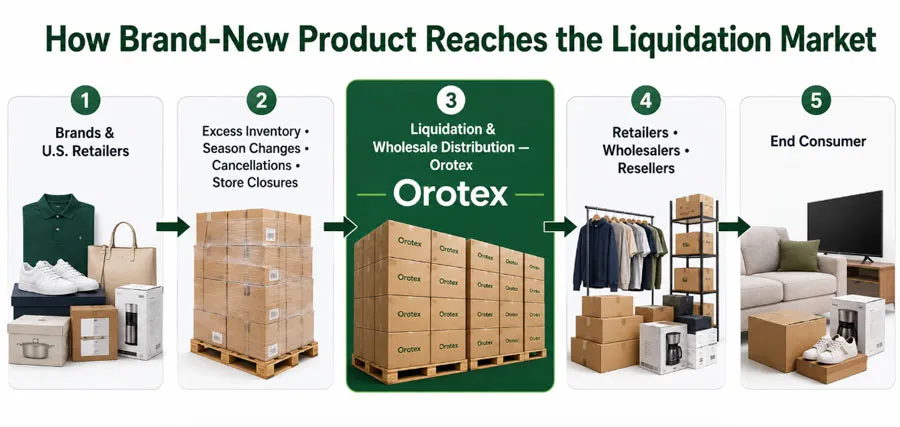
How brand-new product reaches the liquidation market
Brand
↓
Production
↓
U.S. Retail
↓
Excess inventory / Season change / Cancellations / Store closures
↓
Liquidators / Wholesalers (Orotex)
↓
Resellers
↓
End consumer
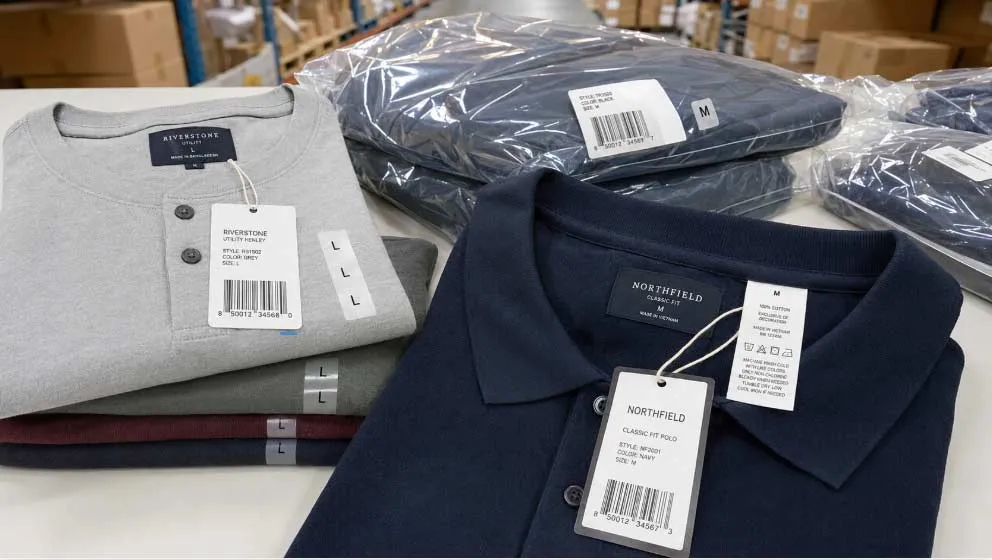
Not everything sold as “U.S. market” or “American” merchandise actually is. Signs an informed buyer should look for:
These signs don’t just protect the buyer — they’re exactly the details the end customer notices and that sustain the product’s perceived value on resale.
Not necessarily. The accurate statement is that it was developed for a market with specific expectations, regulations, and commercial dynamics. That context usually translates into good standards — but the absolute claim doesn’t hold, and a serious seller doesn’t need it.
In most cases, no. The vast majority of liquidation lots come from excess inventory, season changes, cancellations, or merchandise rotation: brand-new product that simply ran out of room in the primary channel.
Not always. The liquidation market includes brand-new sealed inventory, overstock, surplus, and also customer returns, depending on the lot. That’s why supplier transparency about each lot’s origin matters so much.
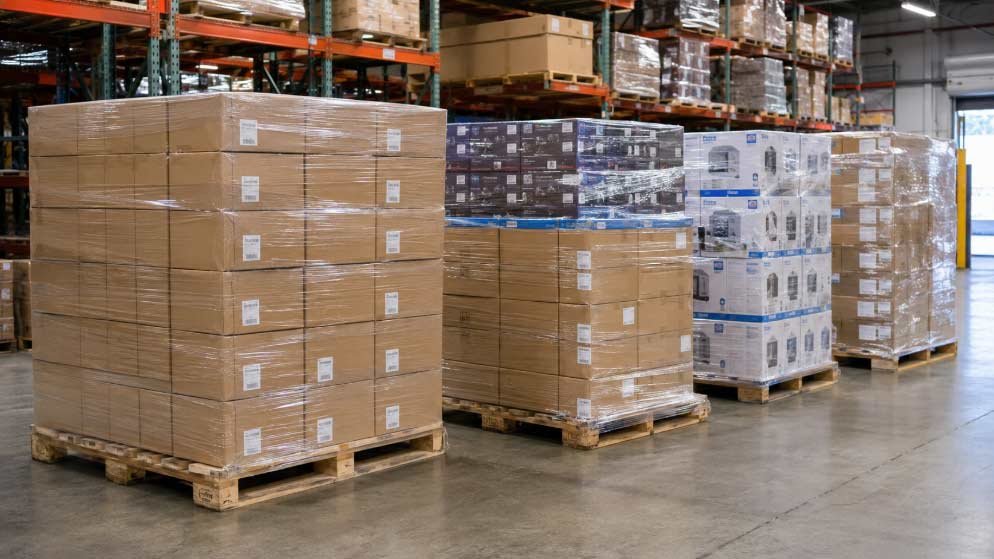
Understanding what it means for a product to be developed for the U.S. market helps buyers make better sourcing decisions. It’s not about claiming every product is superior simply because it was meant to sell in the United States. It’s about understanding the context in which it was created: a highly competitive market, with demanding consumers, specific regulations, and a constant need to deliver products that meet those expectations.
At Orotex, we believe transparency builds trust. That’s why we explain the origin of our inventory and use the seal:
🇺🇸 Made for the U.S. Market
Because behind that phrase is a story worth knowing.
Browse brand-new U.S. market inventory — pallets and truckloads shipped nationwide and worldwide from our Miami warehouse. Request current pricing and pallets availability today.
No. “Made in the USA” refers to where a product was physically produced. “Made for the U.S. Market” refers to the market it was developed and intended for. A product can be made overseas and still be U.S. market merchandise.
It can be. The liquidation market includes brand-new, sealed inventory, overstock, surplus, and customer returns. A reputable supplier always specifies the condition of each lot so you know exactly what you’re buying.
Because of how U.S. retail works: excess inventory, season closeouts, discontinued models, canceled orders, and store closures. The primary channel can’t absorb everything produced, and liquidating fast is often better business than storing — it has nothing to do with product defects.
Overstock is brand-new, unsold inventory — product that never reached a customer. Customer returns are items a shopper bought and sent back; they may be new, opened, or lightly used depending on the lot. That’s why overstock usually carries higher per-unit value, and why knowing the lot’s condition and source matters.
Check the labels (fiber content, country of origin, RN number), the permanent care label, UPC codes, U.S. sizing, and U.S. retail packaging — and ask the supplier for clear lot traceability.
Yes. A large share of U.S. liquidation and overstock inventory is purchased by exporters and international wholesale buyers. Buyers can arrange their own freight or ask our team for shipping guidance to Latin America, the Caribbean, and worldwide.
Lots of merchandise originally intended for the U.S. market — footwear, boots, apparel, and other categories — in condition specified per lot, available by pallet, bulk lot, and truckload from our Miami warehouse, shipped nationwide and worldwide.